
The Stories People Tell
Straight ManThis flow traces the novel’s repeated struggle between comic performance, partial confession, and the difficult truths that emerge only after people act.
increasing Bearing strength in each event
 decreasing
Bearing strength in each eventdecreasingA Dog Story Revisited
The Newspaper Remembers
A Childhood Anecdote
Hank writes about his campaign for a dog and the death of Red. Readers respond with sympathy for his father, while Hank’s mother objects that the story misrepresents him.
Audience Changes Meaning
The same anecdote functions as comedy for Hank, an indictment for his mother, and a moving portrait for readers. The disagreement shows that no storyteller controls every meaning a story acquires.
The Mother’s Correction
Humor Under Challenge
A Demand for Accuracy
Hank’s mother criticizes his dog story for using humor in place of truth and for making his father seem foolish. She argues that cleverness cannot substitute for weight or seriousness.
A Son’s Defense
Hank insists that she name what is untrue, but he knows their argument is also about his father’s return. Her criticism touches a weakness he has hidden inside his comic persona.
The Campus Turns Hank into a Character
Public Image Takes Over
The Newspaper and Protesters
Hank’s old book photograph appears on protest signs, while local media return to the campus to question him. He has become a recognizable figure before he understands what the public thinks he has done.
A Story Beyond Its Author
The label duck slayer compresses his motives and behavior into an easy character. Hank’s own jokes helped create the image, but he cannot dictate how it will be used.
Angelo Holds the Floor
A Story with a Gun at Its Center
Suspense in Retelling
Angelo narrates the porch confrontation slowly, withholding the action after he reaches three. Everyone in the car knows that the story may end in gunfire, but they do not know what he chose.
Experience Resists a Moral
His final compromise is neither heroic nor harmless. Angelo cannot fully explain why he spared the young man, and Hank sees that the person who acts may not understand the story he has created until later.
The Class Cannot Be Edited
Art Meets the World
Workshop Interrupted
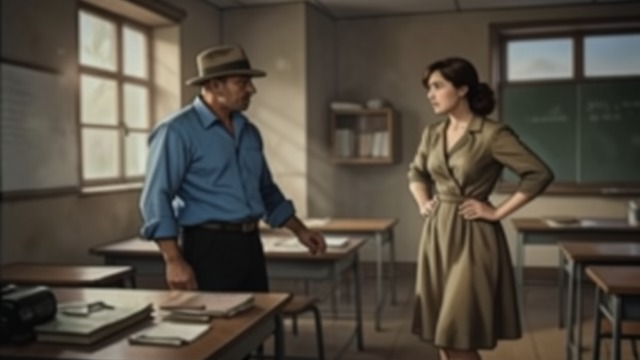
Hank tries to discuss Solange’s cloud-filled story, but news of the strike, layoffs, and campus events overwhelms the class. Leo is then taken away by police.
Reality Has No Clean Plot
The classroom cannot restore the order of a fictional workshop. Hank can recognize themes and patterns, yet real people keep acting outside the shape he would give them as characters.
the winter before the main narrative
early April, during Hank’s visit to her flat
the morning after his televised threat
the drive home from the hospital
the final week of the spring term
